Saturday, August 29, 2015

Malayalee-Bengali

A few weeks ago, I found myself mildly agitated over a shared Facebook status message. It had a Bengali animal-lover venting her anger against the reported mass-culling of dogs in Kerala. The culling was said to have been ordered by the state government to tackle rising stray dog menace.

What annoyed and amused me was not her anger itself, but the nasty racist terms she used to express her indignation -- referring to the “dark-skinned Malayalees’ dark hearts”, as evidenced in our treatment of the strays.

I questioned the need for such vitriol in an otherwise appreciable concern for mute beings. Several Malayalees (including my relatives and friends), Bengalis and others understandably “liked” it when I raised that question. Some Malayalees even chose to pay her back in the same coin.

Today, I am inclined to look inward.

For a long time now, among us Malayalees, animosity towards Bengalis has been simmering. It is palpable.

Our primary grouse seems to stem from the presence of an increasing number of them in Kerala. This calls for a bird’s eye view of the situation. According to 2013 figures, our state has around 25 lakh domestic migrant labourers -- growing at an average of 630 persons per day. This is ironically more than the 16 lakh Malayalees who have famously moved to the Arabian Gulf and beyond over the past many decades.

The largest group of domestic migrants seems to be from Bengal, most of them toiling away in almost every known field -- construction, eateries, masonry and even jewellery designing.

Paddy fields that have for ages been worked on by the next-door farmhand now have Bengali tillers. The neighbourhood coconut tree climber, who once endearingly plucked tender-coconuts for us along with the harvest, is nowhere to be seen. He has been replaced by someone who speaks a strange language, finds it rather difficult to follow instructions, but is diligent and hardworking.

So, when we non-resident Keralites go home on our annual vacations, chances are that we would be served by a boy who is yet to differentiate between a "ney-roast" and a masala dosa.

Racked by poverty and helplessness back home, for the Bengali, the salubrious environs and high income make Kerala his own "Gulf".

For many of us, especially the Gulf Malayalees, his presence is disconcerting though.

This is breeding resentment. Indicative of this resentment is the profusion of “Bengali labourer in Kerala” memes on social media. Almost all of them choose to highlight the Bengali’s supposed astounding ineptitude. Never mind that this may be in complete variance with reality.

This hypocricy conveniently neglects glaring facts:

The Bengali labourer has only filled the gaps left by Malayalees who chose to migrate.

The Bengali is as industrious, hardworking and diligent (or alternatively, inept) as any of us.
Malayalees themselves have been victims of such resentment in other places. The most infamous examples being Maharashtra under Bal Thackeray’s exceptional "guidance", Tamizhnad and other parts of north India.

Though the farcical resentment is yet to peak, we are getting there. For long, we have accused other communities of being intolerant. We were then the victims. Today, we are beginning to demonstrate the same attributes. It is perhaps only a matter of time before we nurture our own Thackerays.

Unless we pull ourselves back from the brink of course.

But till then, in terms of honesty, that Bengali lady who abused us “dark-skinned” Malayalees will remain a notch above those of us who camouflage our vileness with seemingly harmless Facebook memes.

Monday, April 27, 2015

What price, loyalty?

If you thought the vindictive publishing of email IDs of a million Indians by TRAI was a fluke, think again.
About a year ago, PM Narendra Modi promulgated the first ordinance of the NDA-II government to get former TRAI chief Nripendra Misra as principal secretary in the Union government.


Till then, rules prohibited the TRAI chief from taking any official position in the state or central governments within two years of demitting the TRAI position. This was to ensure that the TRAI chief does not take any official action expecting future benefits.

However, Modi changed the rules of the game.

Now, do we have a TRAI chief doing exactly what is expected of him -- browbeating dissenters into submission? And that too without any threat of the Union government getting tainted? 

If you still harbour any doubts over TRAI chief Khullar's attempts to butter up Modi, then good luck!

We perhaps got another glimpse of the 'Modis Operandi' when Justice Sathasivam was made a governor. Soon we had another Supreme Court Chief Justice, H L Dattu, dumping constitutional propriety and praising the PM. (Sathasivam himself acted smart. Just after his retirement, the man got a story on himself planted in TOl, which said he was going back to farming in his native village -- evoking both admiration and a sense of wasted talent)

This kind of favoritism did wonders for Modi as Gujarat CM. The Gujarat model is on full display now in Delhi.

Sunday, March 29, 2015

They want to see me broken: Santhosh Pandit

It didn't take much time to get Malayalam filmmaker Santhosh Pandit on the phone. For one, his phone number was displayed along with credits of his movies. He was on the other side of just a couple of calls and an SMS. The man was circumspect though, not the least because he receives innumerable such calls from people pretending to be fans, journalists and event managers. Yet, there was a certain confidence that Santhosh displayed once the guard was down. From the time the interview was recorded, which is almost two months now, to this day, Santhosh's career and image seem to have progressed, going by media reports. However, I believe, I was able to capture the essence of the man. So here's the full transcript of the interview (to make reading easier, I have done away with the questions I asked. So the entire thing is just Santhosh speaking, with a few explanations by me in brackets):


Please don't harass (Santosh has received several abusive calls in the past). But please free to criticise.

I have made four movies till now. My first film "Krishnanum Radheyum" was a super-duper hit. It was released in October 2011

Then "Superstar Santosh Pandit" in 2012, "Minimolude Acchan" in 2013, and "Kalidasan Kavitha Ezhuthukeyaanu" in 2014. Basically one movie every year. But 2015 will see two films being released. My 2nd, 3rd and 4th films have done average business, with the last one doing slightly better. 

I wanted to be a director; always wanted to be an all-rounder. When I was in Class 12 and pursuing my degree, I realised the possibility of low-budget movies. People discouraged me back then. So essentially it was to prove myself that I ventured into films for the first time.

My father was a PWD engineer in Kuttyadi, Kozhikode. Dad died when I was in Class 11. I have a sister. Mom to died soon. I too got married when I was 22-23. My wife was a bank manager. I have a son. He is called Navajyot Pandit. He is under my wife's custody. We got divorced around six years ago. I entered films after that. 

I am a civil engineer by training. I have a degree in English, MA in Hindi. I have done my typewriting, stenography, software, hardware. I have also pursued my bachelor of academic law. Currently I'm completing MA psychology from Annamalai University.    

Basically, I do not have a great family background.

I have heard from my elders that my family migrated from UP several generations ago. I am a Nair. I still go and give sermons in temples. The surname Pandit comes from my supposed original caste. 

I am completely happy about my time in cinema. When my first films was released, mine was the second-most searched name on the internet, after Facebook. I don't calculate much about the movie business. One thing I realised was that more than producing a movie, marketing it was more important. I understood this from the industrial psychology lessons I took. 

I understood that creating curiosity about the movie was very important before releasing it. There is need to differentiate. That is industrial psychology. Even the songs in my movies are based on that theory. Both my supporters and critics agree on one point, that I am unique. That is my identity.

I do things with a social orientation. Profit is important, but not the central focus of my work, (Quotes "Karmanye va Adhikaaraste").


My audience fall in all categories. Typically, my movies have eight songs. One for kids, one romantic bit, one a fast number etc. I cater to even those who don't like movies. 

I am a member of the producers' association, but not AMMA. You should ask AMMA members about their relationship with me. I had approached them for membership after my first film. But then they said I need to make at least three movies before getting membership. 

Not all TV shows are aggressive towards me. Those who are, please ask them why they are aggressive towards me. Their aggression is not really genuine. They craft it that way to gain TRPs. They provoke me based on a planned script. They actually ask the participants to provoke me. I am human, so often I too get provoked. Like I told you at the beginning of the interview, I tell as them to avoid harassing me. But then they claim what Kerala audience are looking for is harassment -- I do not agree with that though. For instance, a recently-married woman actor was taunted about her husband's looks. She broke down and the channel made money from that.

When they tell me about their plan, if it crosses the limit, I refuse to take part. But then what the channels do is edit out the normal parts and broadcast those where I am agitated following the provocation.

The short route to avoid all this is for me to break down, which is what they want. They have actually told me things like "if you just break into tears, we will avoid harassing you". I think the problem lies with the audience which is looking for such kind of entertainment.

There are people looking to destroy me. There is no doubt about it. When people are not able to succeed in even one job, here I am taking on several roles in a movie and succeeding. 

For instance mimicry artists lament that they have been in the field for decades and yet no nobody wants a photograph taken with them, and here I am, just a few years old, and already a superstar. They even fill up the chat show audience with fans of other stars. People keep asking me why I go for such shows just to get pilloried. Getting interviewed is my job. I am paid for it. Now I am tired of such shows so I started my own show, "The Santosh Pandit Show", on YouTube.

There is a difference between their approach in using me as bait, and mine in caricaturing myself. For instance, in one of the chat shows to supposedly discuss the problems of Malayalam cinema, they didn't get a single owner of the 1,000-odd cinema halls that shut down in Kerala in recent times, leaving just 500 of them functioning today. Instead they discussed me as a punching bag. That's a negative approach. However, what I do before movies is not that. For instance, I upload a normal video and give it a titillating title. Like a video of my putting on make-up inside a moving bus is titled "Santosh Pandit new hot video in bus". This gets my movie huge publicity. Nobody is hurt by what I do.

Even my movies do not have anything wrong to convey. There is no abuse. No drinks, no smoking. My movies are all positive.

I think I do have enemies. You see, to be a hero you need enemies. 

I do not worry whether anybody is working against me. My focus is my work. I want to work from morning to night. 

I have been for 200 inaugurations. During my first inauguration after the release of my first film. Someone threw an egg at me, but it actually hit a policeman. A TV channel made a big issue out of it. It wasn't really a big attack. Nobody is universally loved. I almost feel the channel guys organised the so called "attack". The incident took place after the inauguration and when I was leaving. The reporter waited for two hours after the inauguration. The camera was placed exactly behind my back. The cameraman actually shot my reaction just when the egg was thrown. I didn't complain to the police. So how did the channel know it was an attack. Besides, the TV presenter was smiling as he showed the news. Do you smile when someone is attacked?

I didn't take action against that channel because I didn't want to spoil my ties with that channel and jeopardise my movies' prospects as far as the channel was concerned. Besides, if it becomes an issue, then the credibility of TV media is put at stake. 

I am all for criticism. But even that should be dignified, respectful. It should be constructive. Whereas if someone gets abusive with me, I react. 

So this image of mine of being a subject of ridicule is actually created by TV channels. 

I watch shows in cinema halls because people would crowd in to watch me live. That increases viewership. 

Nowadays, I am not getting the criticism that I got for my first film. That is creating trouble as people are not curious. Recently a director himself created a row by talking about the original delivery scene of his lead woman actor. If people had asked me "how dare make a movie like this" this would have been easier for me. Basically, I don't have a "villain" now. 

My favourite actor is Mohanlal in Malayalam, Akshay Kumar in Hindi and Suriya in Tamizh. 

The reason why I give out my phone number with my name in the credits is that when people have something to say to me, they should be able to. Why should anyone worry about people reacting -- be it positive or negative? 

I employ around 100 people for every movie. 

I like cricket. I read non-fiction, mostly psychology. 

I am 32 years old. 

Please provide my email ID and mobile number in your article. carnival555@gmail.com

I would like to be known as the world's most open and communicative filmmaker.   

Grandpa's Angel

A few years ago, as a rookie reporter, I covered a book-reading session of Vijaypat Singhania's "Angel In the Cockpit". The event at Mumbai's Taj Mahal hotel, if I remember rightly, had all the glittery ingredients -- celebrity audience, with names like the Kapoors of Bollywood among them, excerpts read by Shobha De, a smashing introduction of the author himself and so on.

While the book was about his passion for flying and the hours spent in air, the "angel" in the title was a reference to his granddaughter.

In one of the chapters, the old man describes a mid-air crisis when he stared at near-certain death. At that point he could only look at a photograph he had stuck inside his cockpit, and wait. The picture was of his granddaughter Ananya, then a baby. Once the crisis passed, Singhania came to believe that it was that "angel" who saved his life.

Reading through these line, at one point Shobha De paused. We in the audience could see that she had to give the overwhelmed grandfather a moment. He was wiping his tears, or perhaps hiding them.

-------------------------------------------------------------------

Reading the newspapers this morning, I realised times have changed. Along with her sisters, Singhania's "angel" Ananya, now 26, has taken her grandfather to court over property.

Shobha De's poignant pause was pointless after all.

Thursday, February 12, 2015

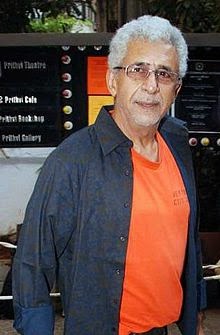
And Then One Day: A Memoir -- Naseeruddin Shah


Irreverent, witty, nonchalant, breezy and yet profound. That’s Shah’s book in short. Coming after Dilip Kumar’s underwhelming work, this was a sparkler.

Be it his taut relationship with his father, or his bizarre first marriage, Shah spares few. Where he does let readers down is when the few he spares are mostly the Bollywood biggies (It’s not AB, if that’s what you are thinking, though there’s not much about him either). 

Shah is arrogant and knows it. He is judgmental and shows it. And boy he can write, and proves it.
Anyone who disagrees with his views is free to write a ‘counter’ book. Till then, this one will remain a benchmark for Bollywood icons.

The short epilogue of the book is one of the best I have ever come across till date. Consider this:
“Ever since I was fifteen years old, following my triumphant turns as Shylock and Lear in school, when I actually began to dare to think of myself as an actor I have always had this waking nightmare: one day I meet up with a wise old man who, after watching my work, says to me, ‘Well… doubtless everyone has always said you are a very good actor but…’ And I still have no clue what he says after the ‘but’…

I think I have reached the stage that when I look in the mirror I get a hazy glimpse of him and he’s looking right into my eyes.”

Take a bow Ramchandra Guha for goading the man into completing the work.

Wednesday, January 21, 2015

An old friend swims away

The wobbly jamboree swarmed in to nibble at anything that was dropped into the algae-laden water. Anything. Pebbles, dead insects, leaves. Even spit. Particularly spit. Our mucus was their favourite.  

Within weeks of the first showers, they were omniscient like the moisture, like the blood-red kunnikkuru – millions of Cadbury Gems-like seeds scattered across the landscape.

She and her friends appeared out of nowhere even as the intense monsoon air cafuned me, when the fine, incessant drizzle played mist in my part of the world. Hitherto dead and muddy water bodies sprang forth with life every June. And when the ponds and canals filled up, she would slip into the ancient lanes and pebbled paths with the gurgling overflow.

For years we were companions. Many were the damp, lazy afternoons of my boyhood and teens 
when I watched over her, tried to hold her, as she frolicked without a care.

We never got introduced though.

Not when I sneaked out of home with twine, hook and earthworms dug up from the backyard of my elderly abode, just to meet her. Not when a cousin named her Thuppaloothi – broadly, spit-eater – for me, just to avoid elaborate explanations. Not when my friends called her Sooli. Not even when she was the star resident of my aquarium.  

Yes, I was in love with her. How could I not be? Pale ochre, with an unmistakable black and red strips
running across her lithe body. For a long time I was convinced that the ethereal one had descended from the skies with the rains. Just like the abrupt profusion of foliage – the medicinal communist paccha, the leathery and ferocious-looking chena-ila, the shy thottaavaadi and the sensuous thumba.

So enamoured was I that once, asked to buy sugar from the corner grocer for the evening tea, I spent three hours leching at her. Indeed, I almost had her in my palms that day, only to be startled by my furious grandpa’s booming voice and that ominous cane.

Thuppaloothi was never alone. The Kannanchaathan was a loner. But he was the smartest too. He would jump out of the water and land at another spot, leaving predators baffled. Paddy fields and temple ponds were home to a variety of Parals and Blaappys. Packs of catfish – Muzhu, Kadu and Etta – were the most slippery, with slithering bodies and stings.
 
Schools of goldfish-like tiny ones indicated the presence of the mighty mother Vraal right underneath. She was the bigger boys’ favourite catch.

As others of my age dived from ever higher jackfruit branches, their fall broken by climbers and creepers, for me, it was the smaller drains and tanks. ‘What lies beneath’ held the allure for me. I felt lifting that veil of mystery by going underwater would spoil it. Truth be told, I was just pathologically scared of chest-deep waters.

Often I would be dipping my palms into the very gutter that would have someone peeing into it just a few metres away. Let’s believe the water flowed in the direction that left no disgust.
 
But that was my world. My own world. Of Kumblakottans, cuckoos, cashew apples and bicycles hired for Rs 2 an hour.

Today, the neighbourhood pond lies unused and lifeless. Bathrooms are the new attorneys of modesty. No more careless frolicking – neither us, nor her.
Many of her companions vanishing, Thuppaloothi too seems to be in her last lap.

A few years back, when she was tagged on the IUCN Red List of Threatened Species, I finally got her name. Denison’s Barb, the freshwater fish species, is among the biggest conservation challenges of the Western Ghats.

They tell me the mistiming monsoon still brings down its version of the mist on the undulating landscapes of my hiraeth. But it misses its progeny.

A monsoon sad and lonely.
 
Thuppaloothi
Born: In my boyhood
Died: Before I do


Tuesday, January 20, 2015

Dilip Kumar: Missed Opportunity


Dilip Kumar’s “The Substance And The Shadow: An Autobiography” is underwhelming.

He may be a great actor. But the book is plain boring. It may be either due to his advanced age, wherein he couldn’t recall much. However, I suspect he chose to keep it that way. It is a please-all venture with major lacunae, bad proof-reading and certainly conceited in parts.

The discontinuity in the narrative is palpable and some of the most important parts of the 92-year-old icon’s life are missing. Even where he chooses to reveal uncomfortable episodes, he keeps them obscure and confusing, maintaining a facade of decency.

The man obviously takes immense pride in his being a virile Pathan -- a package that supposedly comes with in-built dignity, machismo, fearlessness and good looks, besides of course the inescapable sense of honour. Yusufsaab almost has a fetish for his “manhood” (he just can’t stop describing his body hair).

However, his Pathan self-image comes across as jarring when he passes unguarded comments on other communities, be it Bengalis, Tamilians or the British.

The biggest gap in the book involves some of the giants of the era completely missing from his narrative. The third pillar of the matinee triumvirate, Dev Anand, has little more than a mention here and a picture there. The singing icons Mohammed Rafi, Talat Mehmood and Mukesh, who played a humongous role in Yusufsaab’s popularity are not even named.

He makes no comment on the period and upheaval of the partition, despite the fact that he paints an extensive picture of his hometown Peshawar, where he spent his childhood. Important characters in his early life – his grandmother, his home – disappear mid-way.

No mention of the bloody riots that plagued Mumbai at the time he was already a rising star. No insights on what post-partition India felt like for Muslims with roots in Pakistan.

However, there are some three chapters on one topic – his wife, Saira Banu. He is clearly enamoured. Beyond a point it becomes outright boring.

The second part of the book has a series of write-ups about him by famous personalities and others close to him. They all sound the same – like the Gandhi family ‘yes-men’. Can’t blame them; after all, they can’t be critical of him in his own autobiography, can they? 

There's so much more one would expect out of an autobiography of India's premier movie legend. What a wasted opportunity.